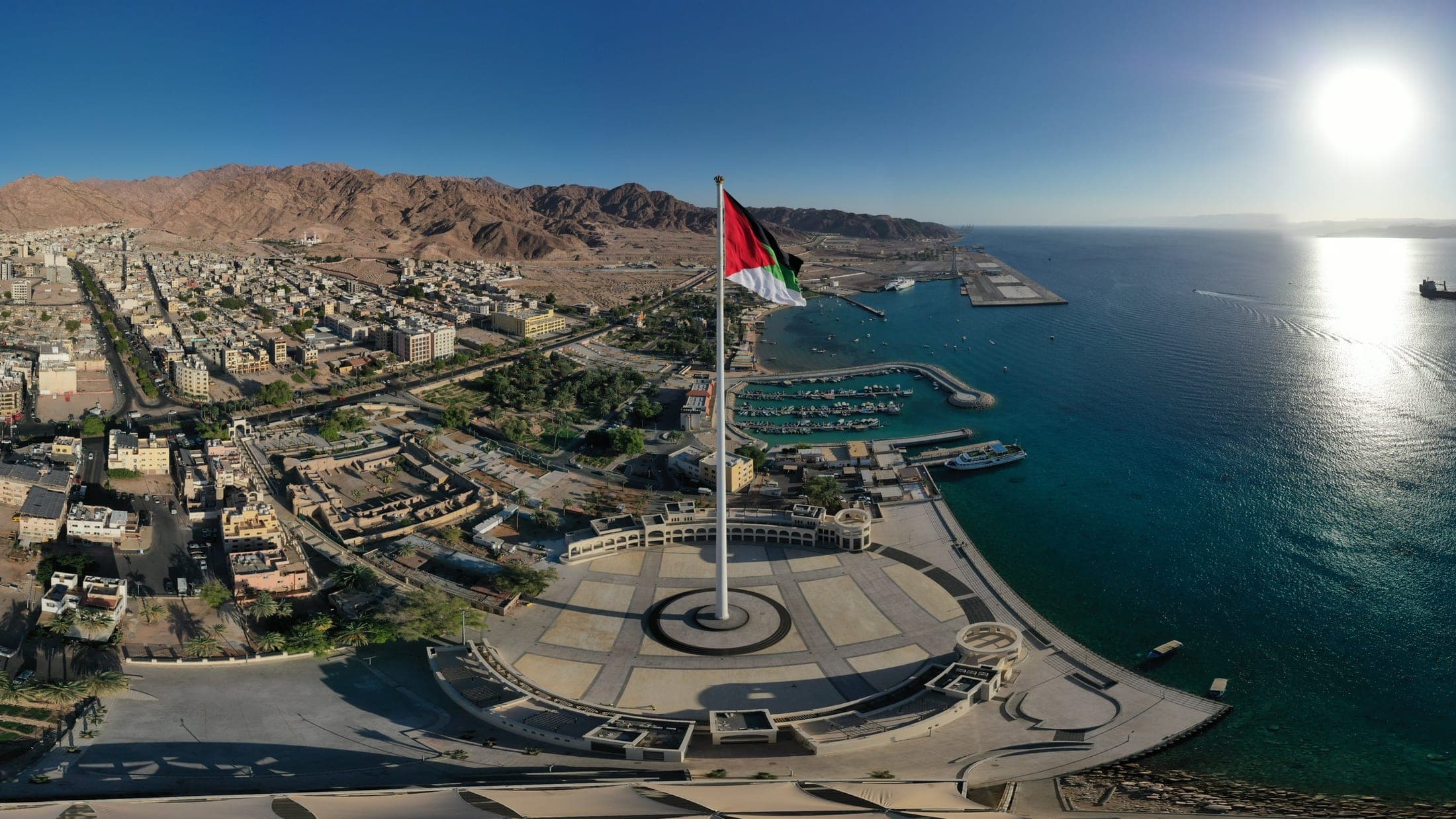
Smart Cargo Visibility and Dwell-Time Reduction
The problem
Cargo, containers, trucks and their paperwork move through Aqaba via a web of operators, facilities and regulators that all have to coordinate. When handovers are manual and visibility is limited, dwell time grows, operations become unpredictable, and costs rise across the whole chain.
Why it matters in Aqaba
Aqaba is Jordan’s gateway. This is the flagship challenge of the cycle precisely because of Aqaba’s trade, port and logistics role: improvements here ripple through the whole zone’s economy, and today ASEZA cannot see clearly where the regulatory or procedural friction actually sits.
The regulatory friction
Manual handovers and limited end-to-end visibility hide where procedural and regulatory friction occurs, making it hard to target the customs, standards and safety processes that slow cargo down.
The innovation need
Solutions that improve visibility, traceability and coordination for cargo movements, truck scheduling, yard operations or multimodal logistics, while maintaining safety, compliance and regulatory control. The space is wide: IoT cargo tracking; yard and truck appointment tools; digital status dashboards; risk-based queueing; multimodal visibility platforms; predictive dwell-time analytics.
The learning question
Can digital tracking, queue-management, IoT or workflow tools reduce operational friction and improve traceability without weakening customs, standards, safety, data protection or operator responsibilities?
Test boundaries and safeguards
A time-bound test in one defined logistics process, route, facility, operator group or data flow, with measurable KPIs: dwell-time reduction, processing-time reduction, tracking-event accuracy, user satisfaction and incident rate.
No disruption of live operations without the host’s approval; clear consent from the users and operators involved; data minimisation, collect only what you need; real cybersecurity controls; and an escalation plan for inaccurate data, system outage or process failure.
What a good answer looks like
A baseline map of the process you are improving; the target users or operators; the data fields you would use; how your KPIs would be measured; an operational risk plan; and, where data is processed, your cybersecurity and data-protection controls.
The sandbox instrument
A time-bound, controlled sandbox pilot in one logistics process under ASEZA oversight, with defined KPIs and safeguards.